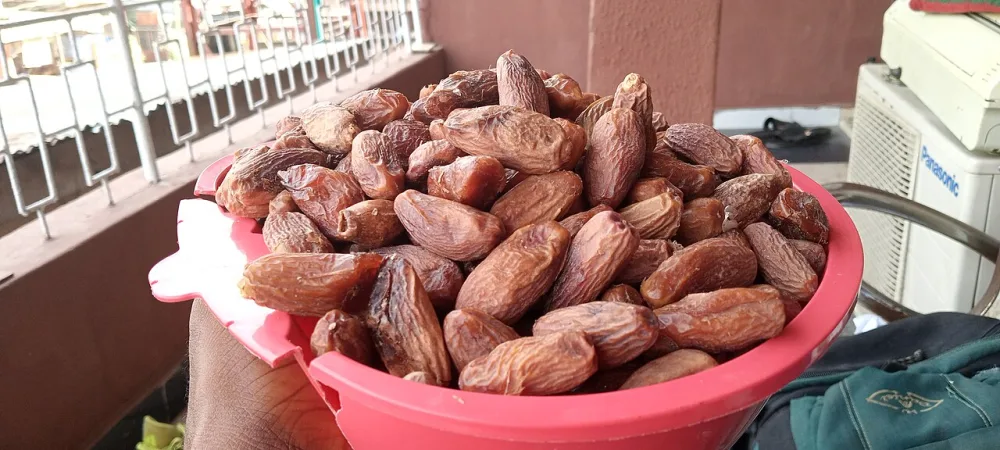
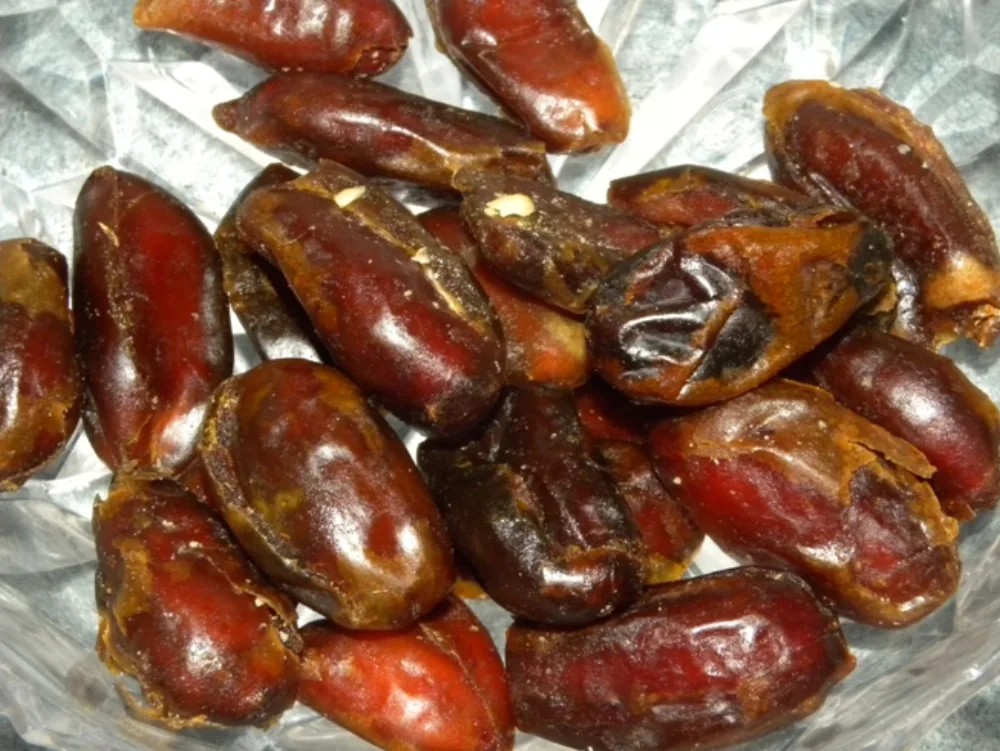
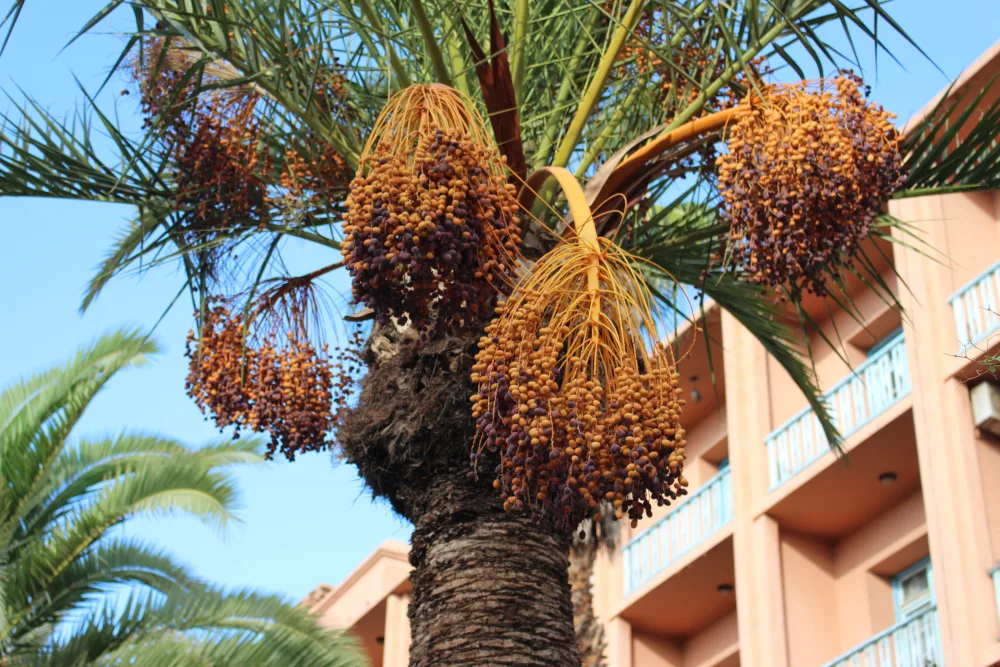
High demand for Sukari dates floods the market with varying quality — from genuinely premium to old stock polished to look appealing. For buyers, the ability to recognize the signs of authentic, quality Sukari dates is the best protection against losses. As a direct importer with more than 40 years of sourcing heritage, we summarize the quality markers also described by national culinary and health sources, so you can shop with confidence.
5 Key Signs of Quality Sukari Dates
| Aspect | Quality Sukari Sign | Warning Sign |
|---|---|---|
| Color | Golden brown to light brown, bright and clean, uniform | Blotchy color, unnaturally dark, or pale |
| Texture | Soft, tender, slightly moist, tends to melt when bitten | Too hard and dry, or excessively sticky |
| Flavor | Natural sweetness like caramel or honey | Sour, bitter, or unnaturally over-sweet taste |
| Skin | Intact, unbroken, no holes | Cracked, holed, or with suspicious patches |
| Aroma | Distinctly sweet and fresh | Sour, rancid, or musty smell |
Telling Authentic Sukari from Syrup-Coated Dates
One market trap is dates coated with syrup or added sweetener to look glossy and taste sweeter. Yet authentic Sukari is already plenty sweet naturally. How to tell:
- Watch the surface gloss. Authentic Sukari is not overly shiny. If the surface is super glossy and feels coated, there may be added syrup.
- Feel the stickiness. Natural stickiness is normal, but candy-like excessive stickiness is suspect.
- Taste it. Natural sweetness feels rounded and not "biting". An unnaturally sharp sweetness can indicate added sugar.
Important note: natural sugar crystals on dry Sukari Mufattal differ from added syrup. Sugar crystals appear naturally from crystallizing fruit sugar, are dry, and are a premium trait — not a sign of polished dates. Do not confuse the two.
The Role of Grade and Labels in Quality
Sukari dates labeled Grade A or premium generally provide a quality guarantee from the producer: tastier flavor, more attractive color, softer texture, and larger, more uniform size. Premium-grade Sukari also tends to spoil less than lower grades due to stricter sorting. Here is a brief overview:
| Grade | Characteristics | Best for |
|---|---|---|
| Grade A | Medium fruit, soft, sweet — market standard | Daily consumption |
| AA Super | Larger, more uniform fruit | Gifts, premium consumption |
| VIP / Royal | Jumbo fruit, strictest sorting | Hampers, special gifts |
Buying from a seller who transparently states grade and harvest origin (Al-Qassim or Madinah) is a trust signal. Sellers reluctant to explain grade warrant caution.
Checking Authenticity and Origin
Quality Sukari generally comes from production centers like the Al-Qassim region or Madinah in Saudi Arabia. Some things you can ask or check:
- Harvest origin — a trustworthy seller can name the source.
- Packaging condition — tidy packaging with grade information is more reassuring than unlabeled bulk.
- Freshness — ask when the stock arrived; moist Sukari ideally is not last season's leftover.
- Seller reputation — a direct importer with a long track record is more accountable.
Practical Shopping Checklist
- Check color: uniform, golden brown, bright.
- Press gently: soft and slightly moist, not hard-dry or excessively sticky.
- Smell the aroma: sweet and fresh, not sour or musty.
- Taste if possible: natural caramel sweetness.
- Inspect the skin: intact without holes or mold patches.
- Ask the seller about grade and harvest origin.
- Compare fair prices; be suspicious of those far below market.
In our product line, Sukari Grade A Moist and AA Super are sorted to ensure uniformity and freshness, with transparent grade and origin information. To understand the differences between grades in depth, read our grade guide, and to care for dates after purchase, see our Sukari storage guide.
Buying Online vs Buying In Person
Today many buyers get Sukari dates through marketplaces or online stores, and each method has trade-offs. Buying in person at a shop or market lets you touch, smell, and even taste the dates before buying — a real advantage for judging quality. But quality in traditional markets can vary widely, and not all sellers are transparent about grade. Buying online offers convenience and access to importers who include grade and origin information, but you cannot inspect physically before the goods arrive. To minimize risk when buying online, note the seller's reputation, buyer reviews, the clarity of the product description (grade, origin, moist/dry form), and the policy if goods do not match. Buying from a transparent direct importer is often the best middle ground: online convenience with clear seller accountability.
Myths That Mislead Buyers
Several misconceptions often lead buyers to misjudge. Misconception one: "The shinier, the higher quality." Quite the opposite — excessive gloss can signal a syrup coating. Misconception two: "White sugar crystals mean spoiled dates." Yet on Sukari Mufattal, natural sugar crystals are a premium trait. Misconception three: "Cheaper dates must be inauthentic." Price is indeed an indicator, but grade and season also matter; what counts is checking physical traits and seller transparency, not guessing from price alone. Misconception four: "Darker color is always better." Sukari is actually characteristically golden-brown, so an unnaturally dark color warrants scrutiny. Understanding the facts behind these myths makes you a smarter buyer, harder to fool.
Closing
Recognizing authentic, quality Sukari dates is not hard once you know what to look for: uniform golden color, soft moist texture, natural caramel flavor, and fresh aroma — plus grade and origin transparency from the seller. With the simple checklist above, you are protected from old stock and syrup-coated dates. For consultation or orders, contact us via WhatsApp at +62 823-4350-8579.